
Opening
The ship chandling market at a major Mediterranean hub has layers. At the top are the established chandlers, operations with 15-30 years of history at the port, relationships built over hundreds of port calls, and a default position in every fleet operator's preferred supplier list. Below them are capable operators who cannot get past the gatekeeping function of established relationships: a fleet operator who has been using the same chandler at Barcelona or Valencia for eight years does not need a reason to continue; they need a compelling reason to switch.
A Mediterranean port agent with strong local sourcing capability, competitive pricing, and genuine quality had been operating for seven years. Their existing clients were satisfied. Their problem was acquisition, reaching fleet operators who did not already know them, and getting enough of a trial opportunity to demonstrate their quality.
The conventional acquisition path, trade show presence, cold outreach, referrals from existing clients, was slow and expensive. Building a new fleet operator relationship from scratch through cold outreach typically required 6-12 months of contact before a first order. The agent did not have the business development resource to run this at scale.
Why It Matters
The established chandler advantage in maritime procurement is real and structural. Fleet operators who have built a relationship with a supplier over years have invested trust, established workflows, and accumulated knowledge of that supplier's specific strengths and limitations. Switching has genuine friction costs, establishing a new relationship, building a new communication workflow, taking the delivery quality risk of an untested supplier.
For a new or smaller chandler, breaking through this relationship barrier requires either a price discount significant enough to justify the switching cost, a unique capability the established chandler lacks, or a trial mechanism that reduces the switching cost enough to make a first order low-risk.
Tidal's marketplace creates the third option. Fleet operators who are on the platform can discover chandlers at their ports, see structured information about their capabilities and services, and place a trial order through a workflow that is standardised and familiar, regardless of whether they have a prior relationship with that chandler.
The Challenge
The port agent's core problem was discovery and trust establishment. Discovery: fleet operators who did not already know them had no way to find them except through trade networks or the limited reach of their own outreach. Trust establishment: a fleet operator who had never worked with this agent had no performance reference and no mechanism to assess quality before committing a real order.
The email-based procurement model reinforces established relationships because it routes RFQs to known contacts. A fleet operator sends an RFQ to the chandlers whose email addresses they already have. A chandler without a prior relationship does not receive the RFQ and cannot participate.
The Solution
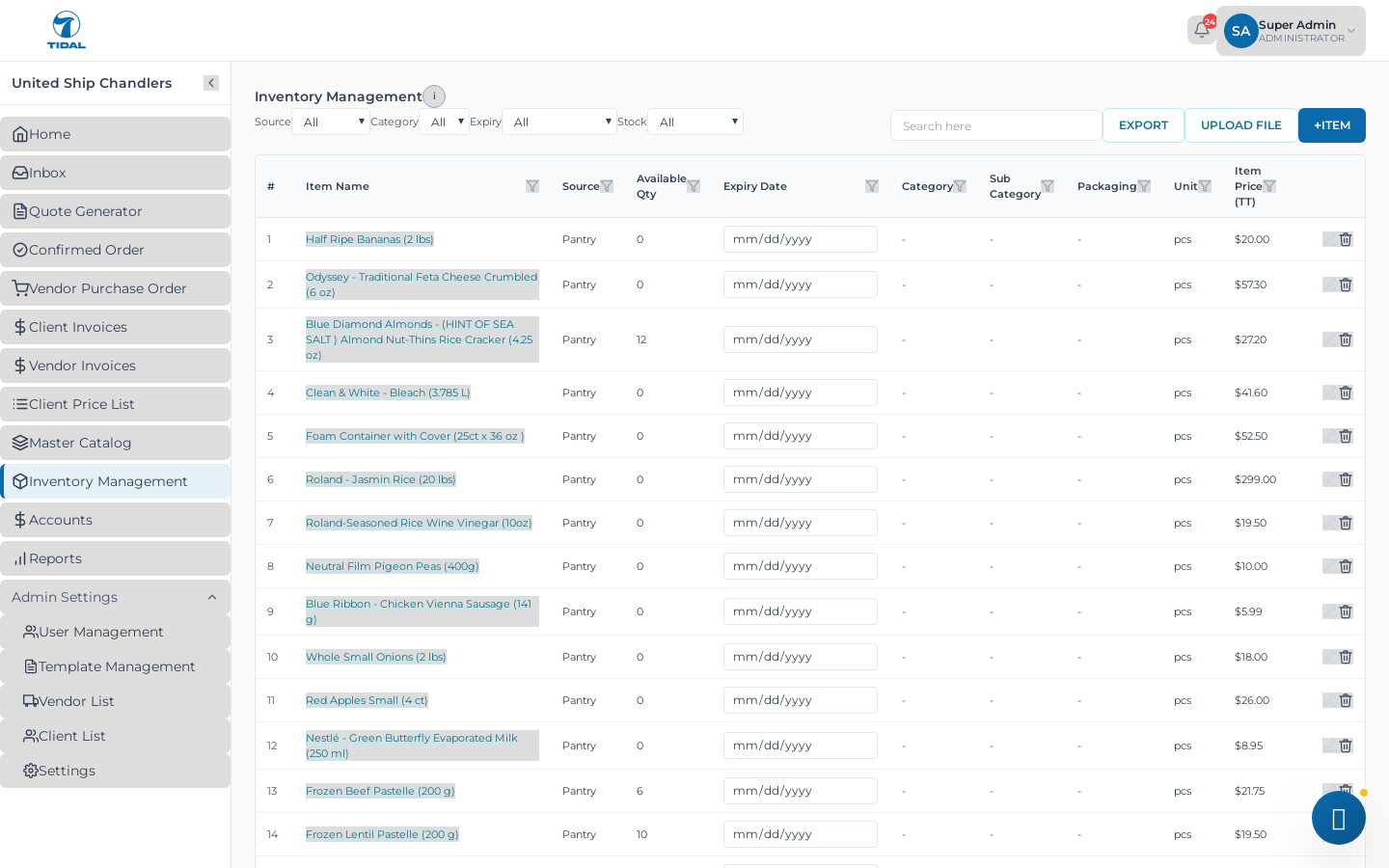
Tidal's marketplace, part of its ship chandling software, made the port agent visible to fleet operators on the platform who were seeking chandler options at their Mediterranean ports. When a fleet operator issues an RFQ through Tidal for a port where the agent is listed, they can include the agent in their quote request, alongside their established chandlers, without any prior relationship.
The structured quote format meant that the agent's first quote to a new fleet operator arrived in the same standardised interface as quotes from their established suppliers. No relationship overhead to establish, no special communication to set up, the agent competed on the quote itself: price, completeness, accuracy, response time.
Once a first order was placed and delivered, the Tidal order record captured the delivery performance. The fleet operator could see their history with this chandler, substitution rates, delivery accuracy, response time, in the same record as their history with established suppliers. The performance data replaced the relationship history as the trust mechanism.
Results
Results measured over 12 months on Tidal:
| Metric | Before Tidal | After 12 Months |
|---|---|---|
| Active fleet operator relationships | 11 | 33 (3x increase) |
| Quote-to-order conversion on first quotes | ~6% (cold outreach result) | 18% (Tidal marketplace result) |
| Repeat order rate (fleet operators who ordered more than once) | 78% of existing clients | 71% of new Tidal clients |
| Business development spend to acquire new clients | Significant (trade events, outreach) | Near-zero (platform-driven) |
| Geographic reach (fleet operator HQ locations) | Primarily local/regional | Added Northern European and Asian fleet operators |
The 18% quote-to-order conversion rate on first quotes, 3x the cold outreach conversion rate, reflects the reduced friction of the platform environment. A fleet operator who has already committed to using Tidal for procurement has lower switching cost for trialing a new chandler through the platform than for establishing a new relationship from scratch through email.
The 71% repeat order rate from new Tidal clients is the more significant metric: it demonstrates that the initial trial orders were converting to sustainable relationships. The structured performance record in Tidal allowed new fleet operators to build confidence in the agent's delivery quality without the 6-12 month relationship investment that direct acquisition required.
Key Takeaways
- Established chandler relationships create a structural barrier to discovery for smaller or newer operators, email procurement reinforces existing contact lists.
- Platform marketplace visibility allows chandlers to be discovered and included in RFQs without prior relationship, competing on quote quality rather than relationship history.
- Structured performance records replace relationship history as the trust mechanism, delivery accuracy, substitution rates, and response time become the reference, not personal acquaintance.
- Quote-to-order conversion on first quotes improved 3x in the platform environment versus cold outreach, lower friction for fleet operators to trial new suppliers.
- Geographic reach expanded: the platform connected the agent to fleet operators who would never have been reached through regional relationship networks.
FAQ
Q1. Do fleet operators use Tidal to find new chandlers, or only to communicate with existing ones?
Both. Fleet operators who have existing chandler relationships invite those chandlers to their workspace and continue working with them through the platform. Separately, the marketplace discovery function allows fleet operators to find and include chandlers at ports where they have no existing relationship, particularly useful for ports on infrequently called routes or for new ports added due to rerouting events.
Q2. How does the platform establish credibility for a chandler with no prior track record on the platform?
New chandlers on Tidal complete a verification process that confirms their operational details, regulatory registrations (where applicable), and service capabilities. The verification status is visible to fleet operators. As orders are placed and completed, the performance record builds automatically, a chandler who is six months into their platform presence has a developing but real performance history that fleet operators can review.
Q3. Are established chandlers also on Tidal, or is it primarily for smaller operators?
Tidal serves chandlers across the size spectrum. Large established chandlers benefit from the RFQ automation and structured order management. Smaller chandlers benefit from marketplace visibility and process standardisation. The platform's value proposition is different for each size, but both sides find genuine operational benefit.
Tidal connects chandlers to fleet operators, and fleet operators to better suppliers. Request a demo for your side of the marketplace. Request Demo →